Tesla's Exclusion From The S&P 500 Is Becoming Embarrassing - But For Whom?
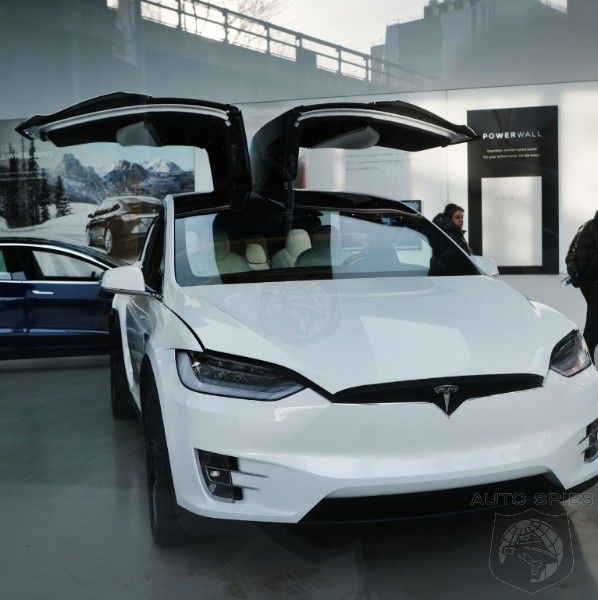
Tesla's Exclusion From The S&P 500 Is Becoming Embarrassing - But For Whom?

After Tesla posted its fourth consecutive quarterly profit in the second quarter, speculations were abounding that the electric car maker was on its way to becoming included in the S&P 500. Alas, this was not the case, with the index adding Pool and Etsy instead of Tesla during its last two adjustments. 

Considering that the electric car maker produced and delivered a record number of vehicles in the third quarter, expectations are high that the company may post another profit in the third quarter. Wall Street, for its part, expects Tesla to show a GAAP profit of $0.32 per share with $8.2 billion in sales. These expectations are quite optimistic, but they do seem feasible considering the company’s Q3 production and delivery figures.


Read Article

mre30mre30 - 10/19/2020 11:21:17 AM
+1 Boost
It’s only embarrassing for Tesla.

Three Reasons:
(a) Tesla's extreme stock price volatility;

(b) The 'poor' quality of Tesla's profitability, coming solely from sale of regulatory credits (Tesla have NEVER earned a profit from its core vehicle business - so is it an automotive business?);

(c) Since Tesla's market cap it so large (artificially large?) by adding it to the index, its inclusion would require a sell-off of other S&P 500 stocks, artificially depressing the market as a whole for a period of time and driving still more volatility.

Spoiler Alert - Investors LOVE the S&P because it is not more volatile than the market - adding Tesla could change that!

The S&P 500 represents more than 83% of the total domestic U.S. equity market capitalization. Since the index is market capitalization-weighted, these companies have the greatest influence on the index’s price performance. Keep in mind that stocks’ prices and number of shares outstanding are constantly changing, so the composition of any grouping may change from time to time.

To reiterate, the S&P 500 seeks to represent the leading companies in leading industries. To be eligible for S&P 500 index inclusion, a company should be a U.S. company, have a market capitalization of at least USD 8.2 billion, be highly liquid, have a public float of at least 50% of its shares outstanding, and its most recent quarter’s earnings and the sum of its trailing four consecutive quarters’ earnings must be positive.

If included in the S&P 500, Tesla would likely garner a weight of more than 1% of the index. "There is simply no precedent for adding such a large piece of fresh equity into the index," Datatrek co-founder Nicholas Colas said.

What a Tesla inclusion in the index would mean for S&P 500 volatility is still up in the air, and it's possible that adding Tesla to the index could cause a short term sell-off in equities as the index has to sell down other S&P 500 members to fund the Tesla stake, said Colas.

However, Tesla's core auto operations have NEVER been profitable. Tesla's profitability has mostly been derived from the sale of Automotive Regulatory Credits, which is the sale of credits to other automakers who are not in compliance with state or federal requirements for zero emission vehicle sales.

The regulatory credit sales translate into direct profits for Tesla, as there are no costs related to them. So while the company has been profitable more recently, it hasn't been driven by its underlying business of producing and selling electric vehicles.

"This puts the S&P committee in charge of adding names to the 500 in a real bind, because while to the letter of their 'law' Tesla qualifies for inclusion this is purely due to regulatory arbitrage," Colas said, adding that "even a modest downturn in demand" could push Tesla "into the red again."


SanJoseDriverSanJoseDriver - 10/19/2020 3:18:48 PM
0 Boost
At some point, people here will surely get tired of being wrong about Tesla stock?

It's overvalued, but the general direction has always been aligned with the communicated strategy. If they continue to grow +/- 1 year of what the plans are they will be a $1-2 trillion company by 2030.


SanJoseDriverSanJoseDriver - 10/19/2020 3:21:15 PM
0 Boost
BTW, you could also argue that if Tesla got the same level of tax credits as oil companies, they would be able to increase their sales substantially. I don't buy the whole regulatory credit argument. Keep in mind Tesla has had 0 federal subsidy for all of 2020, a $7,500 disadvantage vs. competitors and they are still dominating the market. Imagine if gas was $8/gallon and ICE cars were 10% more expensive.


mre30mre30 - 10/19/2020 4:07:42 PM
+2 Boost
...I'm not commenting on the stock, I'm commenting on the attributes of Tesla stock that make it challenging to add to the S&P 500 (though I suspect it is added eventually).

Is Tesla NOT a volatile stock? It is!

Is Tesla's profitability fragile and very inconsistent over the Company's 10 year+ lifespan? It is!

Is Tesla's market cap so huge (fair or not) that it would perhaps be a challenge to integrate into the index and then complicate other index adjustments to allow Tesla stock to be added? It most definitely is!

BTW I did not make any mention of Tesla 'losing' the $7,500 govt subsidy on each EV purchased by consumers (though it is not lost on me and others that Tesla had has to recently slash prices to possibly make up for the loss of the subsidy).

From a profitabilty standpoint, sophisticated people make the valid point that Tesla does not exist to sell EV's at a profit and it instead may exist to sell EV's at a loss, so it can generate EV credits that CURRENTLY can be purchased by other automakers. Tesla, the argument goes, is not in the car business but is in the 'pollution credit sales' business.

#insecure?


SanJoseDriverSanJoseDriver - 10/19/2020 6:11:06 PM
+3 Boost
Volatile, yes but consistently trending up for the past 9 years with a few bumps.

They've had profitability for 4 quarters in a row when just about every other company has been taking on huge losses.

Also, they are selling the only cars today that have any hope of having full self driving capability. No other platform is even upgradeable to that capability, so you're looking at huge upsell potential for the current 1mil+ FSD-capable cars. We'll find out tomorrow how good that FSD 1.0 actually is. They have a great margin on their cars, but they could sell at a loss for FSD and I think eventually they will even stop selling cars entirely and focus more on building a ridesharing network (maybe 7-10 years down the line). That combined with grid storage is where the most value creation will be.

The credits are also a fraction of their revenue.. it used to be a ton but its well below 10% at this point.

We'll see how Q3 went on Wed, but I think it will be another profitable quarter and I think Q4 will blow all expectations away.


MDarringerMDarringer - 10/19/2020 6:59:41 PM
+2 Boost
Nonsense: "BTW, you could also argue that if Tesla got the same level of tax credits as oil companies..."

Tesla has so much help it's ridiculous.


SanJoseDriverSanJoseDriver - 10/20/2020 1:06:06 AM
+2 Boost
Technically they have close to 30% margin on most of their cars. A lot of that gets taken by R&D and capital investments for future models... Cybertruck, Semi, Roadster, $25k Compact Car, etc.


SanJoseDriverSanJoseDriver - 10/21/2020 6:45:25 PM
+1 Boost
Regarding the regulator credits, this is worth highlighting as well. Automotive revenue in Q2 was 5.1 B with 428 M in regulatory credits. In Q3 automotive rev was 7.6 B (2.5 B higher) with 397 M in credits (31 M Lower). The credits are ~5% of automotive income, and the gross margin is a whopping 23.5%.

In Q3 Income from operations would have still been THEIR BEST QUARTER EVER without all 428 M in regulatory credits. They tripled their income from ops from last year.


SanJoseDriverSanJoseDriver - 10/21/2020 6:38:54 PM
+1 Boost
Tesla CRUSHED Q3 earnings.... CRUSHED it, record profitability, GAAP operating profit, net profit. They now have over $14 billion of cash on hand. Their cash position got better over the Q despite spending billions on capital improvements.

****

"The third quarter of 2020 was a record quarter on many levels. Over the
past four quarters, we generated over $1.9B of free cash flow while
spending $2.4B on new production capacity, service centers,
Supercharging locations and other capital investments. While we took
additional SBC expense in Q3, our GAAP operating margin reached 9.2%.
We are increasingly focused on our next phase of growth. Our most recent
capacity expansion investments are now stabilizing with Model 3 in
Shanghai achieving its designed production rate and Model Y in Fremont
expected to reach capacity-level production soon.
During this next phase, we are implementing more ambitious architectural
changes to our products and factories to improve manufacturing cost and
efficiency. We are also expanding our scope of manufacturing to include
additional areas of insourcing. At Tesla Battery Day, we announced our
plans to manufacture battery cells in-house to aid in our rapid expansion
plan. We believe our new 4680 cells are an important step forward to
reduce cost and improve capital efficiency, while improving performance.
We continue to see growing interest in our cars, storage and solar
products and remain focused on cost-efficiency while growing capacity as
quickly as possible."


Copyright 2026 AutoSpies.com, LLC