The History - Fulda Reifen: dedicated to “high-performance” products
Long years of tradition in special vehicle construction First high-speed tests with the streamlined Maybach in 1939
In the 1920s, the sales managers at Fulda Reifen, known at that time as Gummiwerke Fulda, were quite sure that the brand’s image should not be communicated in isolation from the end-product that stands on four tires. Consequently, they bought a bus, had it converted into a luxury coach and as of 1925, presented Fulda’s new patented Parabel tire all over Germany and the neighboring countries. The first of a long series of special models was born.
Whether advertising vehicles equipped with record players and loudspeakers, the tail section shaped like huge tires, standing in front of the Reichstag in Berlin (1931), whether as a tire test streamlined bus with special license for speeds over 140 km/h (1961), or as a show truck series (from 1985) to demonstrate the respective latest high-tech truck tire generation – in all chapters of the Fulda company history there have been Fulda special vehicles.
The most challenging technical commission to produce a special model in the first half of the company’s history with the simultaneous mysterious conclusion was awarded by Fulda in 1938. The starting point was the rapid development in automotive design in the 1930s which, due to the increasingly refined aerodynamic automobiles, permitted higher and higher speeds. In addition, the construction of the “Autobahn” provided motorists with the opportunity to travel further at higher speeds. That was a challenge to the tire industry. Bernd J. Hoffmann, Managing Director of Fulda Reifen comments: “My pragmatic predecessors did not hesitate long: At Dörr & Schreck, a renowned vehicle-maker in Frankfurt, they commissioned the construction of a vehicle for tire tests. Precondition for this order was the assurance of the manufacturer that the vehicle could regularly make high-speed tests at more than 200 km/h." Dörr & Schreck accepted the order and looked for the absolute leading cooperation partner in automobile manufacturing at that time: Maybach Motorenbau. Together and with the help of the well-known aerodynamic specialist, Freiherr Reinhard Koenig Fachsenfeld, they designed a three-seater streamlined car on the basis of a Maybach SW 38 chassis. The Fulda coupé with its two-color paint job and pontoon form had a long extended tail section sloping to the rear. From a bird’s eye-view the overall line looked like a rectangle with rounded edges. The rear wheel arches were completely panelled, as was the underbody, even the door handles were partly recessed.
To reach the speed of over 200 km/h demanded by Fulda, the technicians installed a 6-cylinder engine with 140 hp. The exceptionally low air resistance coefficient of 0.25 (a figure of 0.6 was usual at that time for series-produced vehicles), also helped guarantee this speed. The precondition was, however, that the chassis did not exceed a weight of 1,600 kg.
On 27 July 1939, Dörr & Schreck finally announced the completion of the SW 38: “The car is extremely interesting and beautiful. It lies well on the road and the streamlined shape already makes itself felt at 60 km/h. Soon afterwards the car was delivered, but as a result of the outbreak of war its use was soon to be very limited. During the chaos of war the test vehicle disappeared and was never found again – its whereabouts remain a mystery to this day.
Looking back, it seems that the Fulda managers at that time could not foresee two future developments:
the imminent outbreak of war, which practically prevented the use of the coupé and
the emotional avalanche that the streamlined car triggered off several management generations later at Fulda Reifen.
An idea wins space.
The idea - the tire - the car: The Exelero project
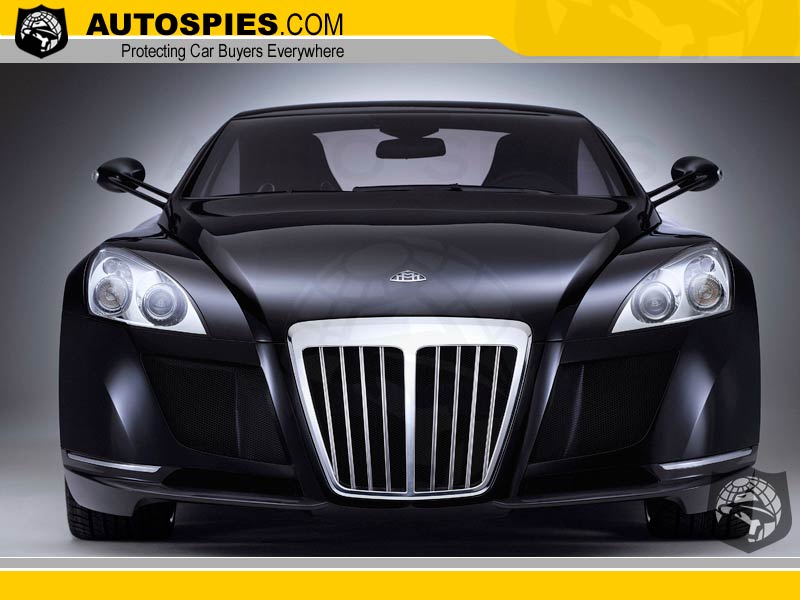
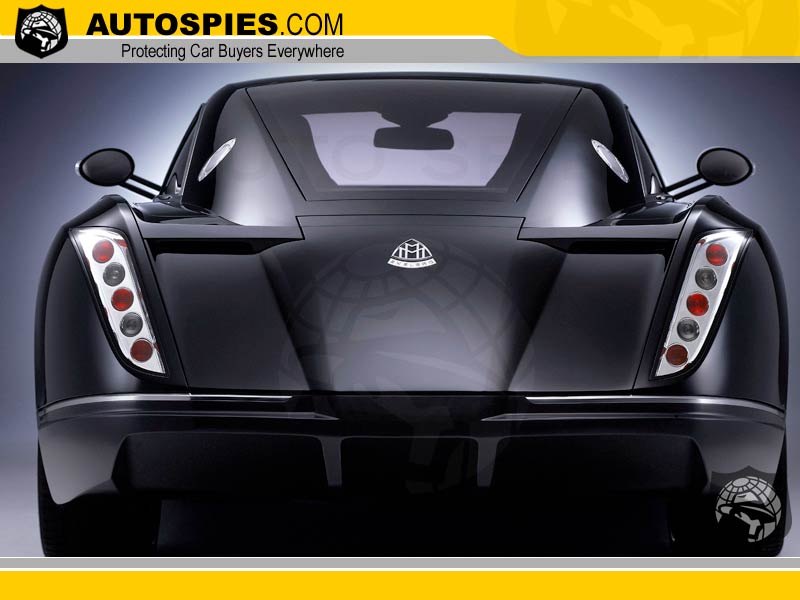
Fulda Carat Exelero - "State of the art in tire design" Cooperation with the best - Maybach becomes project partner
Ultra-high performance tires, top products for demanding motorists with high performance cars are not introduced to the market every year. They are the result of intensive tests over many millions of kilometers in technical laboratories and under the most extreme road conditions at high speed. Years go by before they achieve their optimal performance profile in the critical eyes of the tire specialists.
In 2005, the successor to the long successful and tried and tested Carat Extremo will be introduced to the specialist trade. A summer wide tire of an extra class - the Fulda Carat Exelero. High performance – sporty, dynamic and and comfortable.
How and in what setting such a high-end product should be presented?
In 1996, the manufacturer from Fulda already faced the same problem with the Exelero predecessor and that was solved with brute force. The noble design workshop Gemballa created a show vehicle based on the Porsche 911 convertible with a 3.8-liter Biturbo engine, 600 hp and all-wheel drive which catapulted the racing vehicle standing on its 18-ich rims and Extremo tires to a maximum speed of 350 km/h.
Why not once again design such an automobile built around a top Fulda product? The previous concept was successful.
This time the problem was different. The Exelero tire line, for the first time tested in advance by the TÜV (Technical Control Board), is not comparable with the predecessor generation. This applies to the design and the extended extreme sizes up to 315/25 ZR 23 version! A complete wheel in this still weighs around 46 kilograms.
How can the claim of this tire technology be interpreted in automotive form?
During the team meetings the image of the Fulda streamlined vehicle of 1938 repeatedly went through the minds of the decision-makers. Then it became clear: the successful comeback only a couple of years ago of Germany’s most exclusive automobile make tipped the balance – it had to be Maybach. A go-between was quickly found. René Staud, top photographer for automobiles, a man with 31 years of work for DaimlerChrysler and 20 years for Fulda Reifen behind him. Leon Hustinx, Maybach, meets Bernd Joachim Hoffmann, Fulda. A cooperation is agreed on. Then everything moves very quickly.
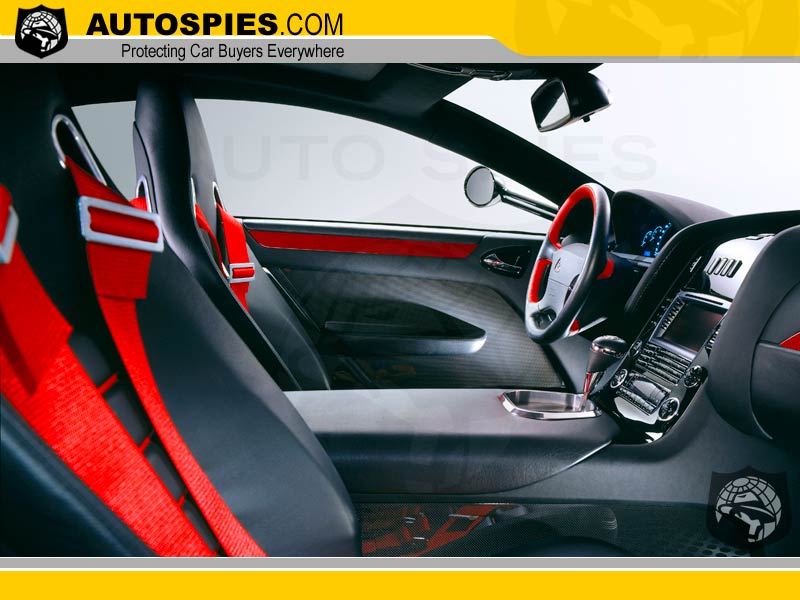
Maybach agrees to make a platform available on the 57 basis. The initial ideas revolve around the basic idea of the SW 38 streamlined car, they are rejected. This vehicle will stand on the best tires that Fulda has to offer. For the Fulda project team under the direction of Bernd J. Hoffmann, Managing Director, Helge Jost, Marketing Manager and responsible for the communicative project interface, and Rolf-Dieter Stohrer, Senior Manager Car Tires, responsible for wheel and tire technology, it is therefore quite clear: the vehicle should be more than just a reproduction. To quote Oscar Wilde they want only the best of everything.
Click here to view part three